 War of the Ecosystems
Request Strategy Session
War of the Ecosystems
Request Strategy Session
The next phase of enterprise artificial intelligence will not be won by the company with the most impressive demo assistant.
It will be won by the company whose artificial intelligence systems understand the business well enough to act inside real work.
That distinction matters. Most executives have already seen chatbots answer questions. Many have seen agents draft content, summarize meetings, search documents, or update a record. Those capabilities can be useful, but they do not prove that artificial intelligence has entered the operating system of the business.
The real test is different: can the system understand the definitions, metrics, ownership, permissions, current facts, exceptions, and decision rules that make work trustworthy?
If it cannot, then the model is only speaking near the business. It is not working inside the business.
That is why the context layer is becoming strategic.
Databricks Genie One is a useful market signal. Databricks describes Genie One as a data-smart artificial intelligence coworker for business teams. Its current product, launch, blog, and release-note materials point toward governed insights, agentic actions, scheduled tasks, monitoring, updates, Slack, Microsoft Teams, Jira, email, application access, and a Genie Ontology that learns business context from data, artificial intelligence tools, and workplace applications.
Ignore the vendor language for a moment and focus on the pattern.
The product category is moving from ask a question about data toward operate a task using business context. That is a different game.
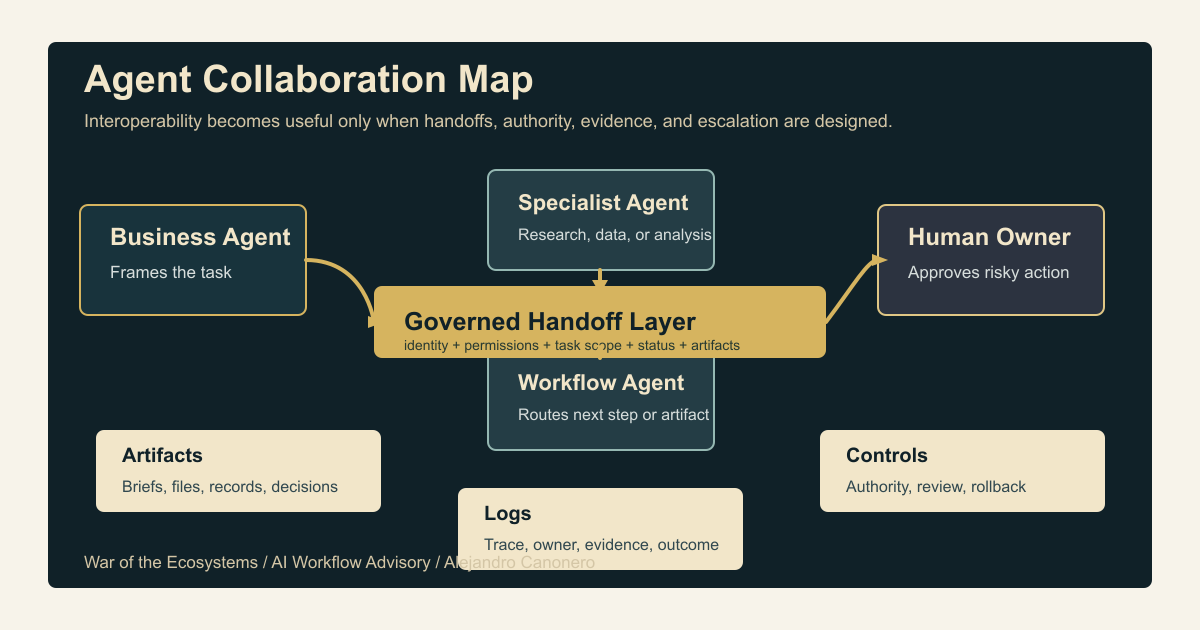
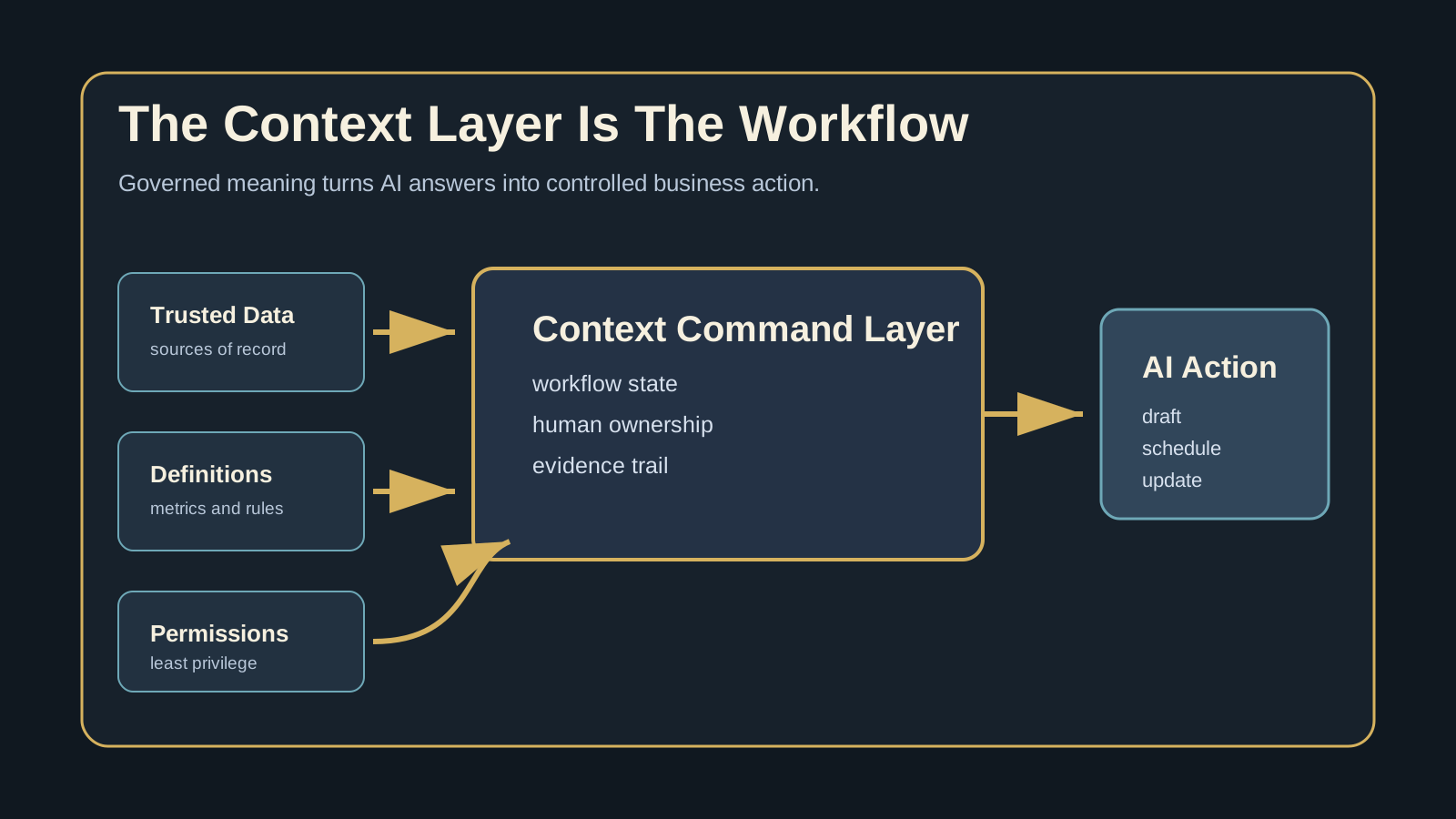
A business does not need another place to ask vague questions. It needs a way to turn trusted data, agreed definitions, team context, permission boundaries, and workflow state into controlled action.
The context layer is not preparation for the workflow. The context layer is the workflow.
1. Why Context Is More Than Data
Many companies hear context and think only about documents, databases, or vector search.
That is too narrow.
Business context includes the metric definition, the source of record, the permission boundary, the recent change, the exception rule, the customer history, the owner, the approval path, the risk policy, the current objective, and the evidence that proves what happened.
A revenue number without a definition is noise. A customer status without the latest support issue is incomplete. A sales forecast without territory rules is misleading. A finance variance without policy context is risky. A product metric without release timing may be misunderstood.
The workflow depends on those meanings.
When an analyst answers a question manually, much of that context lives in human judgment. The analyst knows which dashboard is outdated, which field has changed meaning, which product line uses a special definition, which region is missing data, and which executive will ask for the reconciliation.
Artificial intelligence systems do not automatically know that.
They must be given a governed context layer or they will produce fluent answers that may be detached from the operating truth of the business.
2. The War of the Ecosystems Reading
In the War of the Ecosystems framework, this is not a feature race. It is ecosystem command.
The side that controls the context layer can influence how work is interpreted, which facts are trusted, which definitions are used, which systems are touched, which actions are allowed, and which outcomes are measured. Context is therefore not only a data-management topic. It is a strategic control surface.
This is where platform envelopment becomes visible. A platform that owns the business context layer does not need to win every isolated application battle. It can surround the workflow by controlling identity, data meaning, permissions, approval routes, evidence, and the place where work becomes action.
That is why the strongest artificial intelligence ecosystem will try to become the command surface where context turns into work.
For clients, the warning is practical. Do not let context drift into whichever vendor interface is easiest to adopt. Decide which business meanings, permissions, exceptions, and evidence trails must remain under your own operating control.
3. The Real Lesson From Genie One
Databricks is not only talking about a better data chatbot. Its materials point toward an agentic coworker that can use governed business data, answer questions where teams work, create documents, schedule recurring tasks, monitor changes, and send updates through workplace systems.
That reveals the operating pattern.
That is the move from analytics to operations.
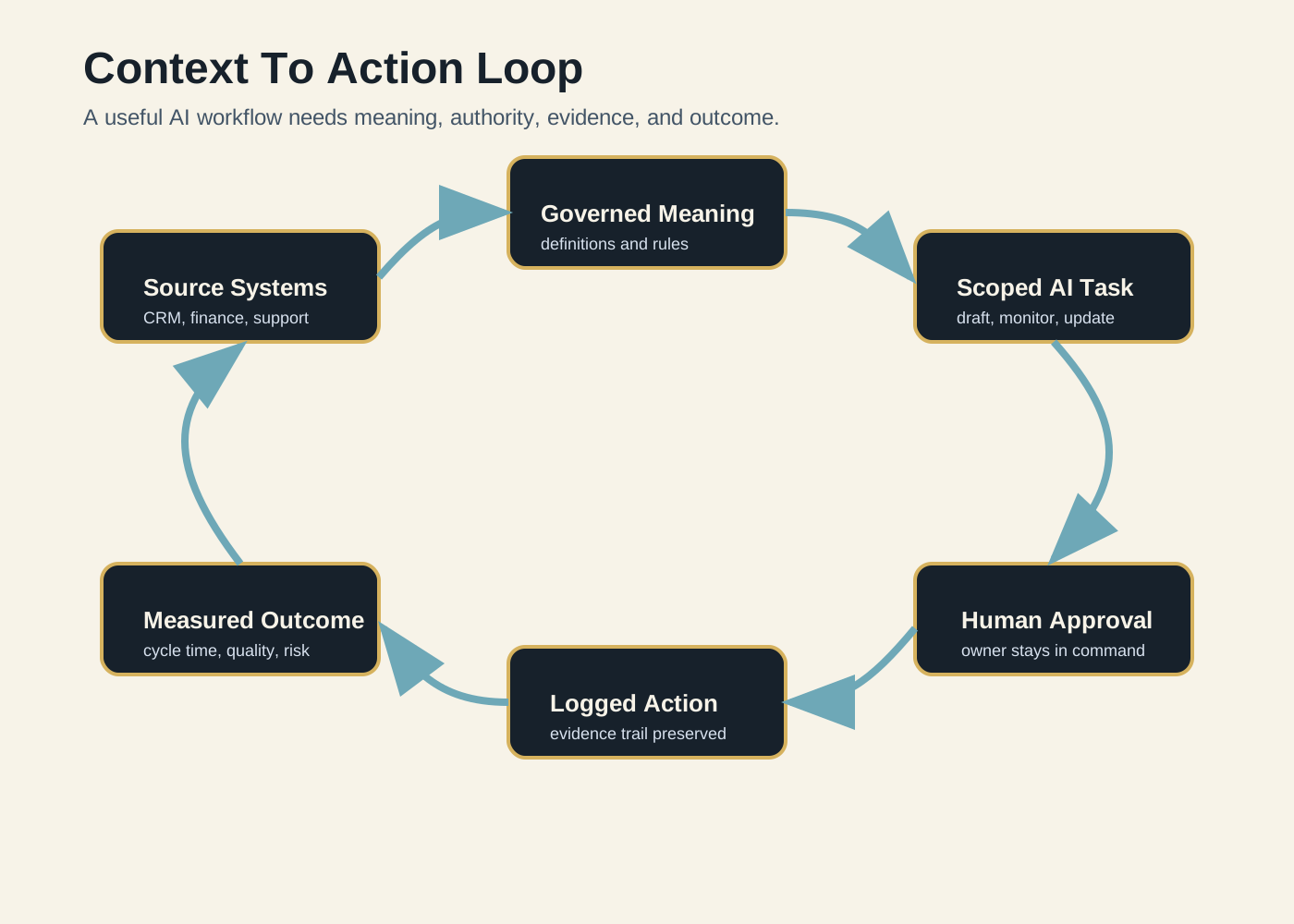
The old business-intelligence pattern was: ask a question, inspect a dashboard, export a report, discuss in a meeting, assign follow-up manually.
The emerging workflow pattern is: ask a question, retrieve governed context, draft the decision artifact, schedule the monitoring task, send the update, create the follow-up, preserve the evidence, and escalate exceptions.
4. Battlefield Example: Khafji And The Shared Ground Picture
A real battlefield example clarifies the issue without turning the article into decorative war language.
During Operation Desert Storm, the Battle of Khafji in January 1991 exposed the value of a shared operational picture. Iraqi forces moved toward and into the Saudi border town of Khafji. Coalition forces had to understand moving ground formations, friendly positions, weather, aircraft availability, target priorities, and command authority quickly enough to respond.
The U.S. Army's history of Joint Surveillance Target Attack Radar System in Desert Storm describes how the developmental E-8A Joint STARS aircraft provided wide-area surveillance and moving-target information that helped commanders see Iraqi ground movement. Air & Space Forces Magazine's account of Khafji describes moving target indicators showing signs of an Iraqi attack in the making, with coalition aircraft then used against Iraqi armor and vehicles.
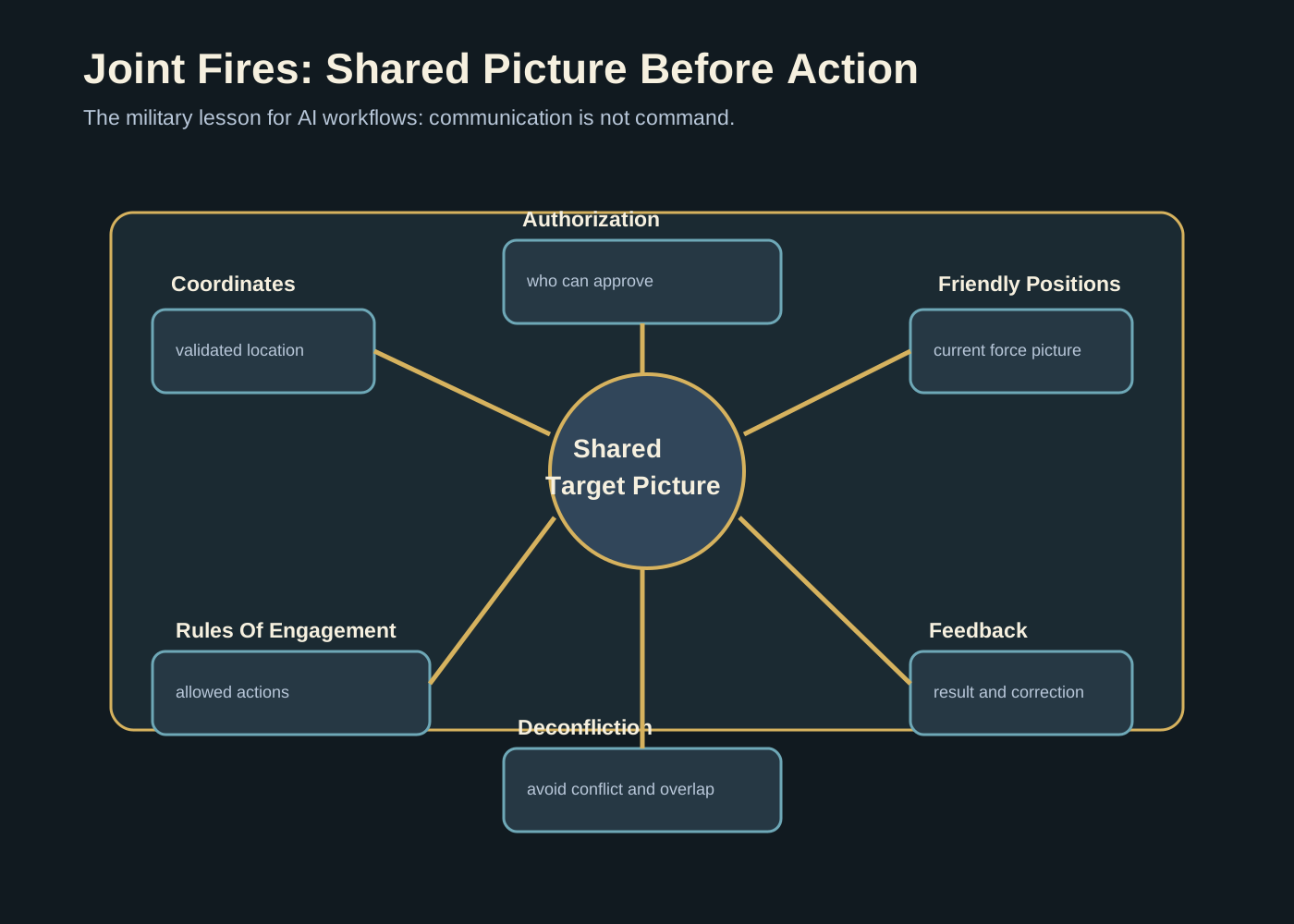
The lesson is not that a sensor won the battle by itself. The lesson is that action became useful when the force could connect sensing, interpretation, friendly-force awareness, targeting, aircraft tasking, and command decisions into a shared picture.
“The lesson is that action became useful when the force could connect sensing, interpretation, friendly-force awareness, targeting, aircraft tasking, and command decisions into a shared picture.”
, Dr. Alejandro Canonero, DBA, author of War of the Ecosystems
That is the analogy for enterprise artificial intelligence workflows.
The agent is not the aircraft. The dashboard is not the battlefield. The prompt is not the order.
The real question is whether the organization has a shared, governed, current picture of the work.
For a sales workflow, that means trusted account context, customer history, opportunity stage, pricing rules, objections, approvals, and proposal evidence. For a finance workflow, it means source systems, definitions, close calendar, policy controls, exception thresholds, and audit trail. For a support workflow, it means customer history, entitlement, known issues, product version, severity, escalation rules, and owner.
Without that shared picture, the artificial intelligence agent may act quickly and still act badly.
With that shared picture, the agent can become part of a controlled operating loop.
5. The Minimum Viable Context Layer
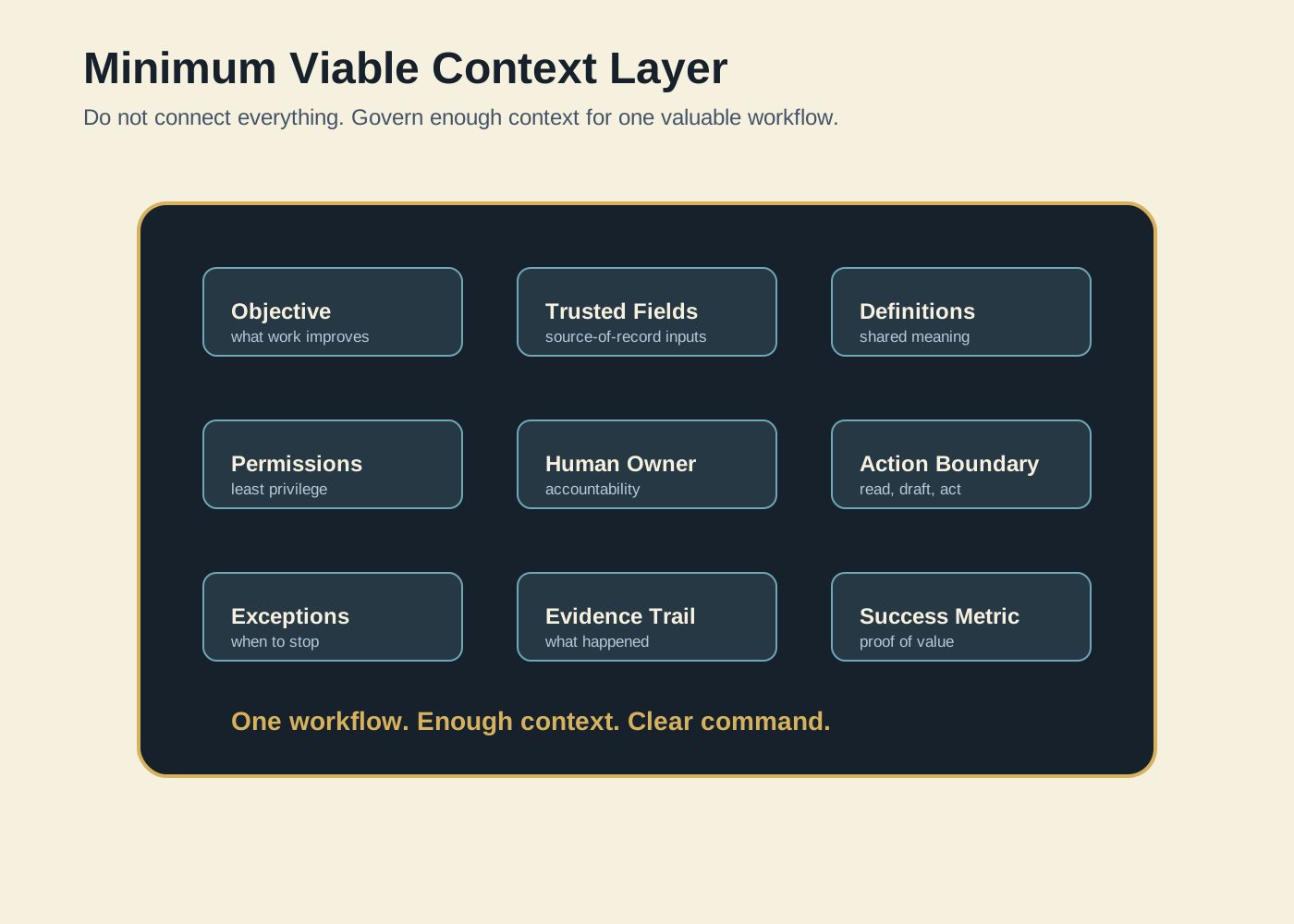
The first useful move is not an enterprise-wide context program that takes years. The first useful move is a minimum viable context layer around one valuable workflow.
A minimum viable context layer is the smallest governed context package that allows one artificial intelligence workflow to operate safely and measurably.
The objective
Name the workflow, the owner, the business outcome, and the decision or action that will improve.
The context
Select the trusted fields, definitions, permissions, exception rules, and evidence trail.
The loop
Scope the agent task, preserve human approval where needed, log the action, and measure the result.
For example, a professional-services firm could build a context layer around proposal response. It would include the approved service descriptions, client history, pricing rules, prior objections, legal boundaries, evidence library, approval owner, and win-quality metric. The artificial intelligence system could draft and monitor, but the commercial position would remain under human command.
A customer-support team could do the same around escalation. It would include product version, customer tier, incident history, entitlement, known issues, severity rules, escalation owner, and resolution metric. The agent can summarize and route; the organization controls the meaning and action boundary.
6. What Leaders Should Notice
First, the context layer is not an information technology cleanup project that happens before artificial intelligence. It is part of the artificial intelligence operating model itself.
Second, context must be governed, not merely collected. A business can connect many sources and still produce confusion if definitions conflict, permissions are vague, and ownership is unclear.
Third, action changes the standard. It is one thing for an assistant to answer a question. It is another thing for an agent to schedule a task, draft a document, update a system, notify a team, or trigger a downstream workflow.
Fourth, the strongest ecosystem will try to own the place where context becomes action. That may be a data platform, a productivity suite, a customer relationship management platform, an enterprise resource planning platform, a work-management platform, a cloud platform, or an orchestration layer.
Fifth, clients should not wait for a perfect enterprise-wide context layer. They should choose one valuable workflow and build the smallest trustworthy context package around it.
7. The Risk And Control Note
The risk is that connected context can create false confidence.
A system may retrieve data correctly but misunderstand the definition. It may know the customer record but miss the exception. It may draft the right artifact for the wrong approval path. It may update a system before the owner has checked the action boundary. It may preserve a log that proves activity but not quality.
That is why context-layer design must include controls: source-of-record rules, definition ownership, permission boundaries, human approval points, exception escalation, audit trail, and outcome measurement.
Governance is not the paperwork after automation. Governance is the architecture that allows automation to be trusted.
The Decision
Do not start by asking which artificial intelligence agent is most impressive.
Start by asking which workflow has enough value, context, ownership, and measurable outcome to become a controlled operating loop.
Then build the minimum viable context layer around it.
That is how artificial intelligence moves from fluent answer to ecosystem command.
Source Evidence
- Databricks Genie One product page, Databricks
- Databricks launches Genie One, Databricks press release
- Introducing Genie One, Genie Agents, and Genie Ontology, Databricks Blog
- AI/BI and Genie One release notes 2026, Azure Databricks documentation
- JSTARS plays critical role in Operation Desert Storm, U.S. Army
- The Epic Little Battle of Khafji, Air & Space Forces Magazine
Independent synthesis by Dr. Alejandro Canonero, DBA. Historical examples are used as strategic analogies. Source organizations do not endorse this interpretation.