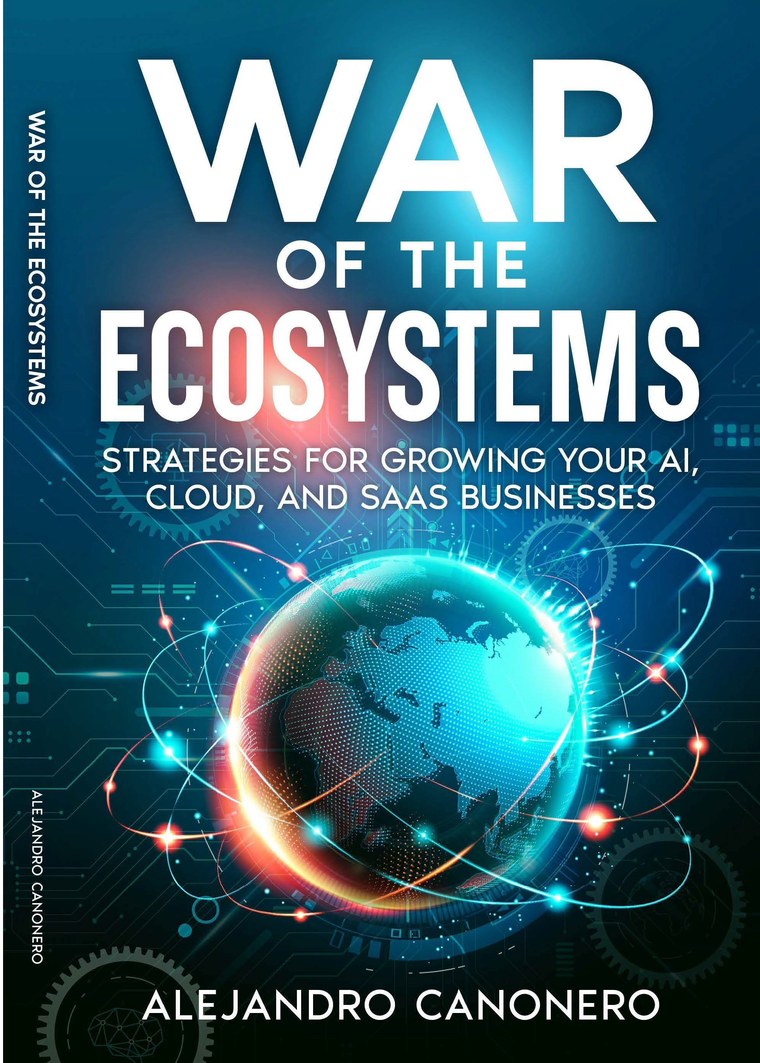
 War of the Ecosystems
Request Strategy Session
War of the Ecosystems
Request Strategy Session

Resolve routine requests across knowledge, account systems, and escalation queues while preserving a clean human handoff. The strategic question is not whether artificial intelligence can perform one task. It is whether the organization can coordinate signals, knowledge, systems, decision rights, controls, and people into a dependable operating loop.
The real operating problem
Customer service rarely fails because an answer does not exist. It fails because the answer, customer context, policy, and permission to act sit in different systems. A useful orchestration layer assembles that operating context before it responds.
The design objective is not maximum automation. It is dependable resolution: answer routine questions, complete permitted actions, recognize uncertainty, and transfer the full case history when human judgment is required.
Automate the known. Escalate the consequential.
The military counterpoint
The U.S. Navy Combat Information Center emerged to combine radar, communications, plotting, and human judgment into one coordinated operating picture. Its value did not come from one sensor. It came from routing the right signal to the right decision and response.
This is a strategic analogy, not evidence that a commercial workflow should be militarized. It exposes a recurring coordination problem: distributed signals and specialized participants create value only when a trusted operating system connects them.
Read the historical source from the U.S. Naval History and Heritage Command.
The documented business proof point
The published Decagon case describes tailored support workflows that combine model reasoning, company knowledge, evaluation, and escalation across millions of conversations. OpenAI reports that one large customer handled 91% of global support without human involvement and that new customer infrastructure can be operational in days.
These are company-reported results from a specific implementation. They demonstrate feasibility; they are not independent validation, a forecast, or a guarantee for another organization.
Read the original deployment source.
The War of the Ecosystems reading
In the War of the Ecosystems, the winning service experience is not the smartest chatbot. It is the best coordinated network of channels, knowledge, account data, policies, actions, and people. The orchestration layer becomes the command post: it decides which resource enters the engagement and when.
Competitive advantage comes from coordinating specialized participants around a shared operating picture, not from owning the most impressive isolated tool.
The historical counterpoint makes the coordination pattern visible. The documented business case shows the pattern appearing in modern operations. Together they form a transparent evidence bridge between operating logic, public implementation evidence, and the book's strategic framework.
“Together they form a transparent evidence bridge between operating logic, public implementation evidence, and the book's strategic framework.”
, Dr. Alejandro Canonero, DBA, author of War of the Ecosystems
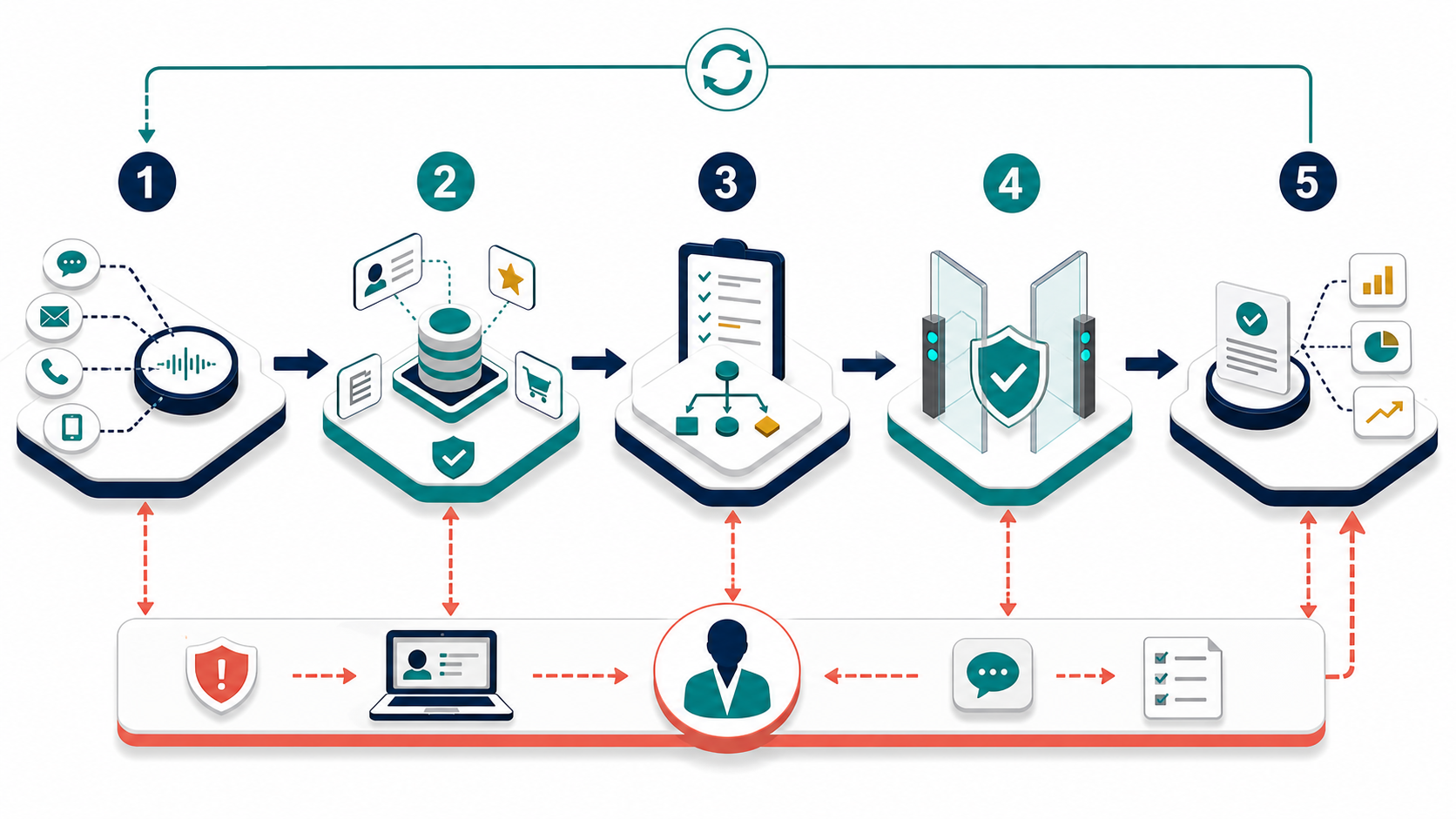
The five-stage operating doctrine
- Detect intent. Classify the request, language, customer, urgency, and emotional signal.
- Assemble context. Retrieve approved knowledge, account history, entitlements, and relevant policy.
- Plan resolution. Choose an answer, permitted action, clarification, or escalation path.
- Execute safely. Respond or complete a bounded action with identity and policy checks.
- Learn from outcome. Capture resolution, correction, escalation reason, and customer response.
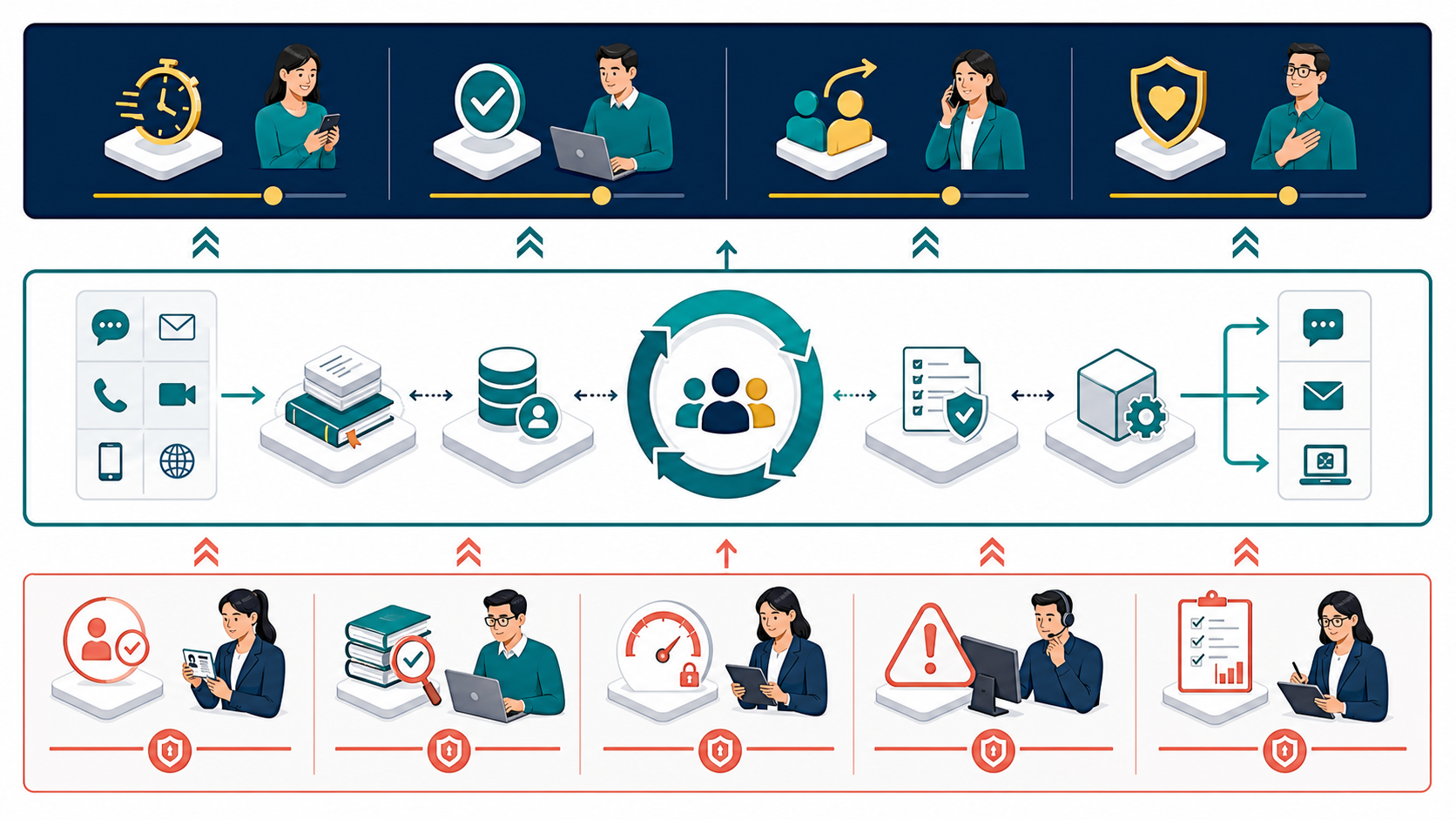
What the Ecosystem Commander must govern
The executive dashboard
Non-negotiable control gates
- Approved-source retrieval only
- Action and refund limits
- Identity verification before account changes
- Human review for vulnerable or high-impact cases
A controlled 90-day route
Recon
Map the top 20 intents, source systems, policy boundaries, and current failure reasons.
Pilot
Automate three high-volume, low-consequence intents with full logging and human fallback.
Scale
Expand only when resolution quality, escalation quality, and customer trust hold.
The decision
Do not begin by asking which model to buy. Begin by asking which operating loop matters, which participants must coordinate, what evidence can be trusted, where authority must remain human, and how the system will learn.
That is how artificial intelligence moves from isolated capability to ecosystem advantage.
Connected reading
- Explore all 20 AI orchestration use cases
- Read War of the Ecosystems and its central thesis
- Examine the Ecosystem Commander framework
- Review Dr. Alejandro Canonero's executive profile
- Test your operating readiness
Sources and evidence discipline
- Decagon and OpenAI deliver high-performance, fully automated customer support at scale, OpenAI
- CIC (Combat Information Center) Yesterday and Today, U.S. Naval History and Heritage Command
- AI Risk Management Framework, NIST
- ISO/IEC 42001 artificial intelligence management systems, ISO
Independent synthesis by Dr. Alejandro Canonero, DBA. Historical examples are used as strategic analogies. Source organizations do not endorse this interpretation.