 War of the Ecosystems
Request Strategy Session
War of the Ecosystems
Request Strategy Session
Artificial intelligence creates value through systems, not isolated demonstrations.
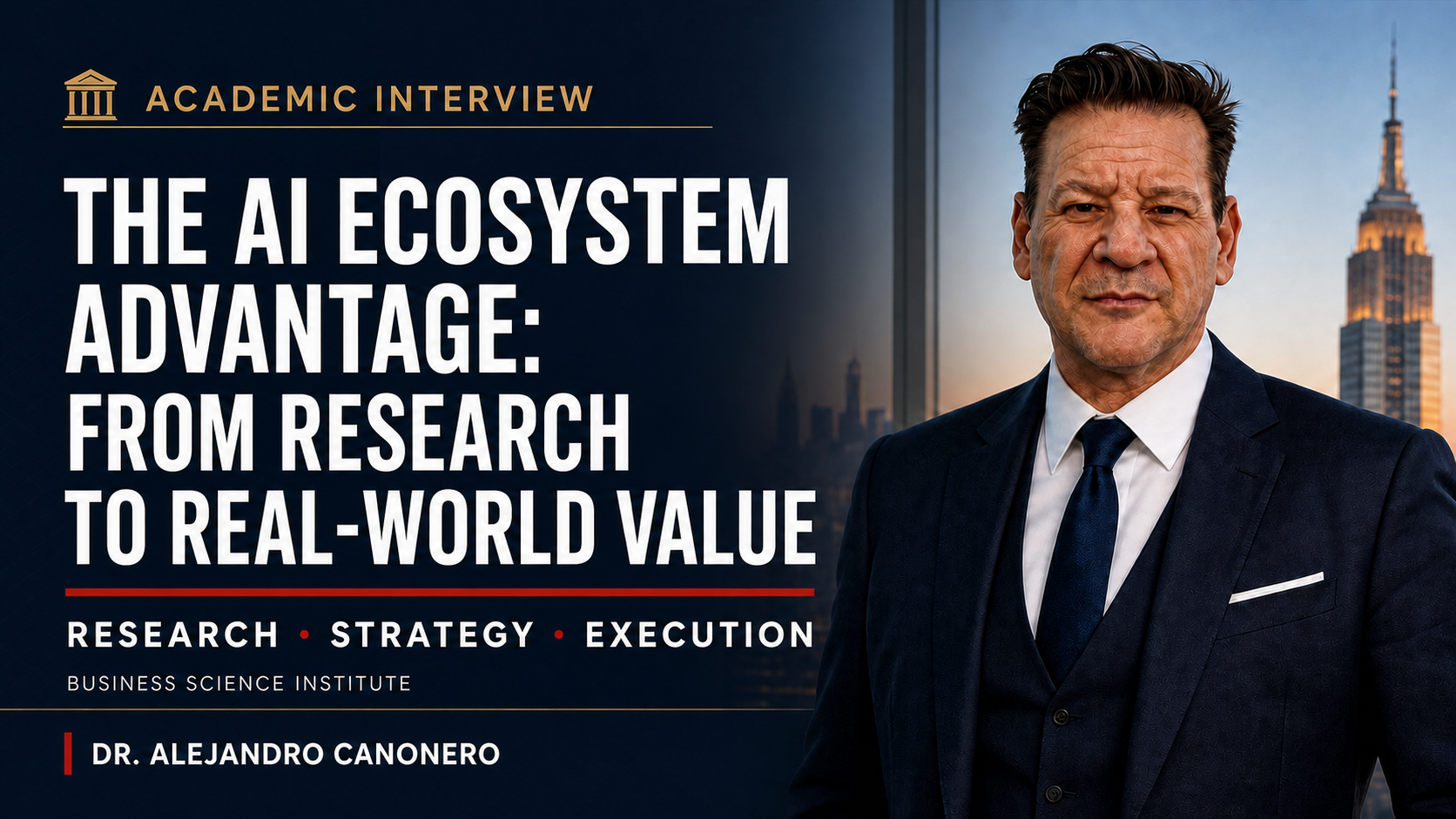
The model matters, but so do the partners that extend it, the platform that distributes it, the data that makes it useful, the governance that makes it trusted, and the operating rhythm that turns insight into a result. That is the question at the center of Dr. Alejandro Canonero's Business Science Institute interview.
Research with consequences in the market
A practitioner-scholar has to move in both directions. Executive experience should make research more concrete. Research should make executive decisions more disciplined.
In the interview, Alejandro connects technology leadership with the work of understanding how artificial intelligence ecosystems create value. The emphasis is not on academic language for its own sake. It is on turning complex market questions into researchable problems, teachable cases, and decisions that leaders can use.
Original video: ExecutiveDBA on YouTube. Institutional page: Business Science Institute Executive DBA Australia.
Three layers of value
The interview can be read through three connected layers. Each layer answers a different executive question.
Read the ecosystem visually
The interview's argument belongs to a wider system. These three field-manual maps make the relationship between capability, partners, governance, and measurable value easier to brief and apply.
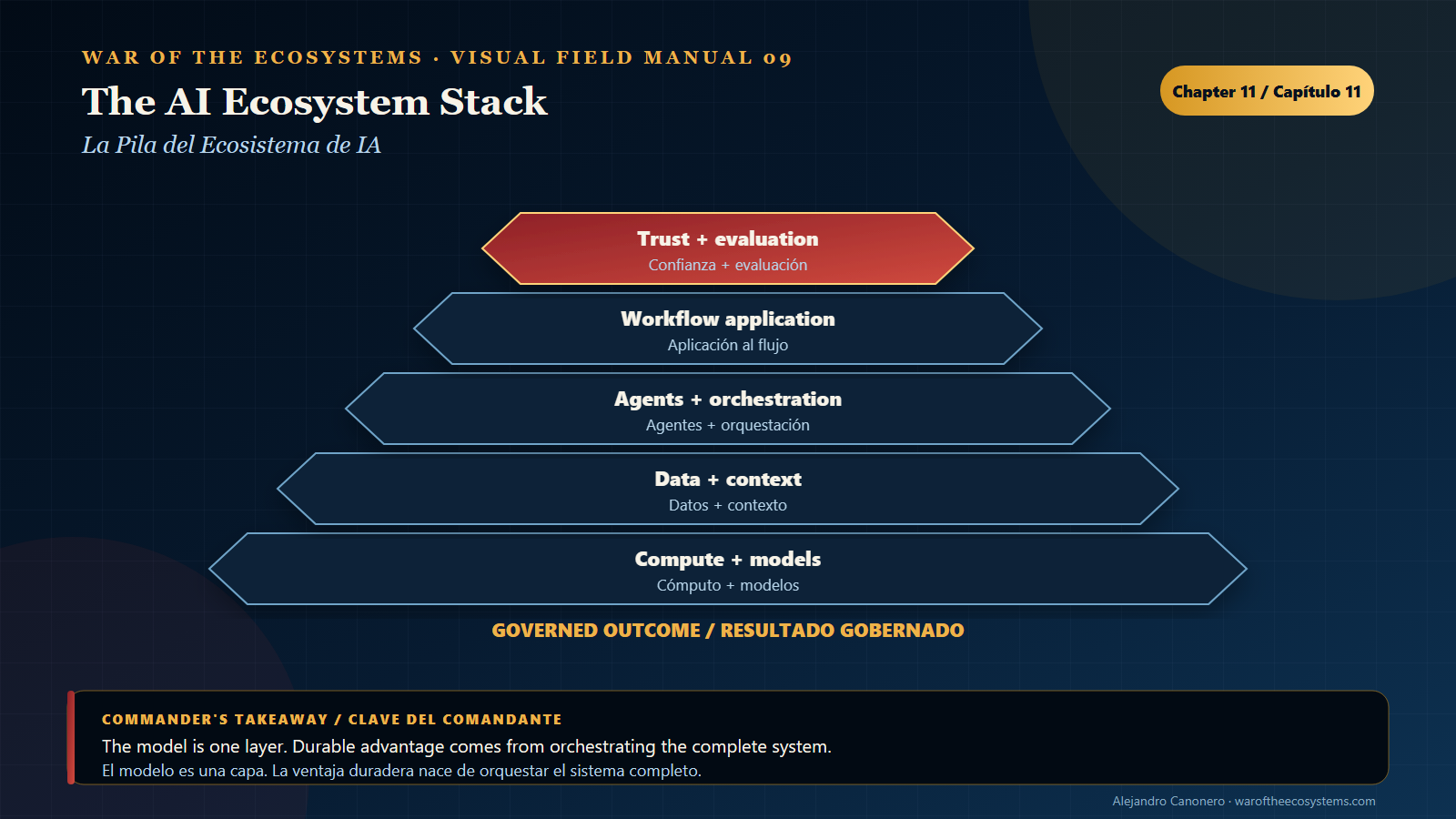 Chapter 11 field manualThe AI Ecosystem StackThe model is one layer. Durable advantage comes from orchestrating the complete system.
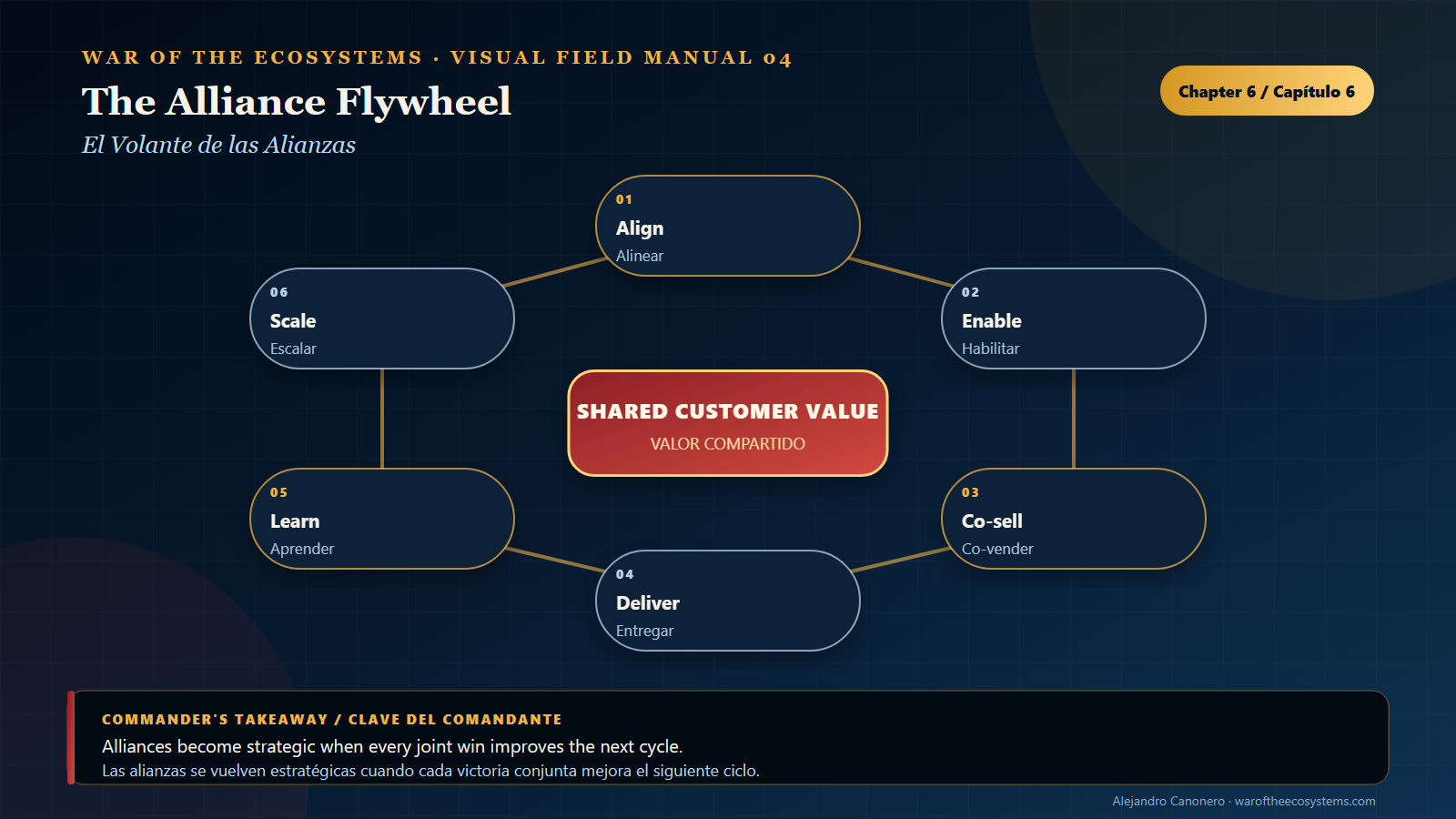 Partner strategyThe Alliance FlywheelAlliances become strategic when every joint win improves the next cycle.
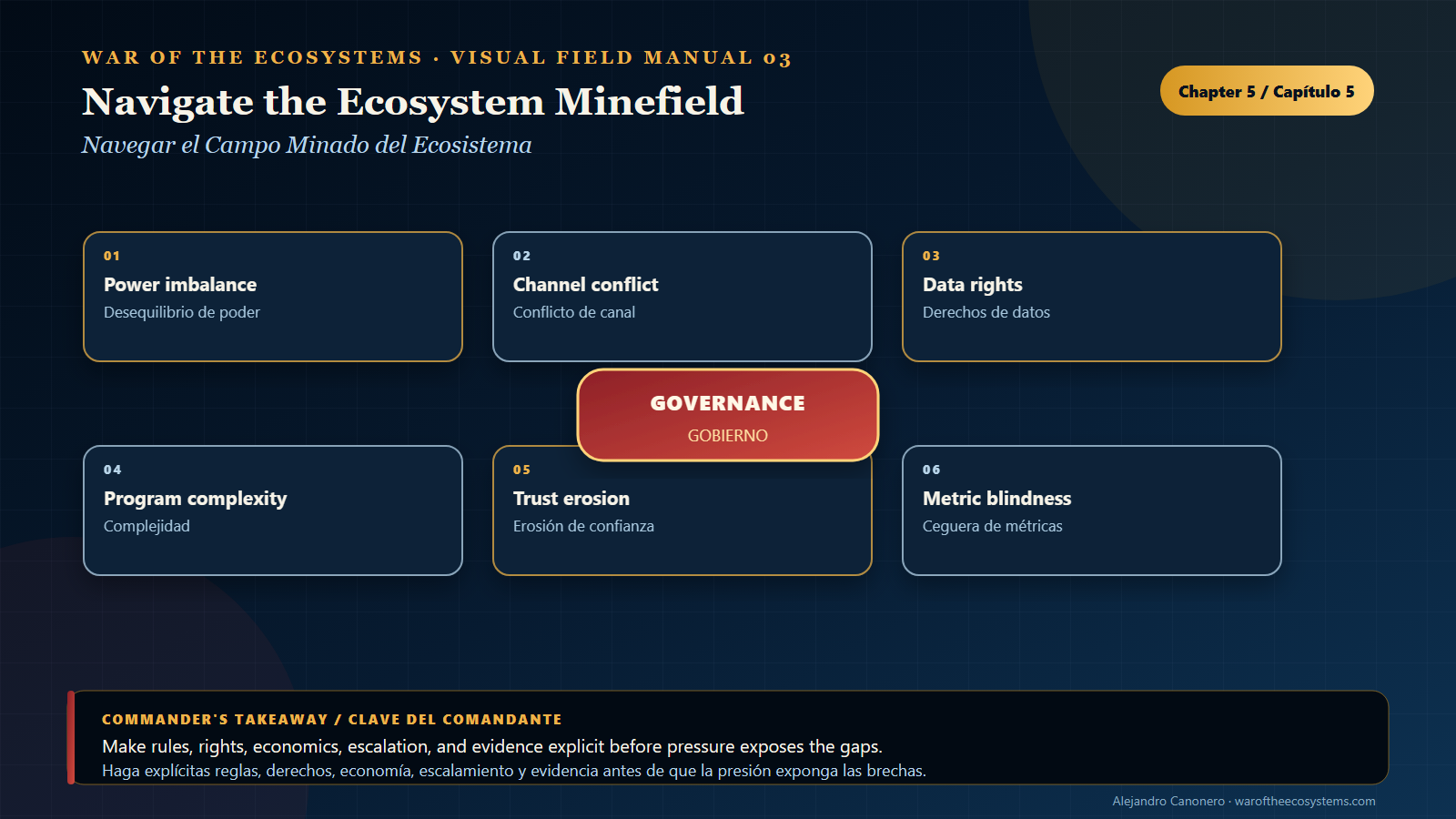 Trust and governanceNavigate the Ecosystem MinefieldMake rules, rights, economics, escalation, and evidence explicit before pressure exposes the gaps.
These visuals are part of the War of the Ecosystems visual field manual and are included here as supporting doctrine for the interview's research-to-execution argument.
AI ecosystems create value when research, strategy, and execution move as one operating system.
What this means for leaders
Boards and executive teams should ask more than whether an artificial intelligence initiative is technically impressive. They should ask whether the ecosystem around it is designed to learn, distribute value, earn trust, and scale responsibly.
That means making the partner model explicit. It means naming who owns the customer relationship, the data, the integration, the user adoption, the risk, and the next decision. It also means recognizing that an ecosystem can lose value through friction just as quickly as it can gain value through innovation.
“It means naming who owns the customer relationship, the data, the integration, the user adoption, the risk, and the next decision.”
, Dr. Alejandro Canonero, DBA, author of War of the Ecosystems
For founders, the lesson is to build the smallest credible coalition that can create customer proof. For boards, it is to test whether the company has an executable ecosystem path. For universities and executive educators, it is to connect research to the choices that managers face under pressure.
The decision
Do not evaluate artificial intelligence ecosystems by the novelty of their models alone. Evaluate the complete system: the research question, the partner coalition, the platform position, the governance model, the learning loop, and the measurable customer value.
That is the bridge between executive practice and academic contribution. It is also the bridge between a promising innovation and a durable ecosystem advantage.